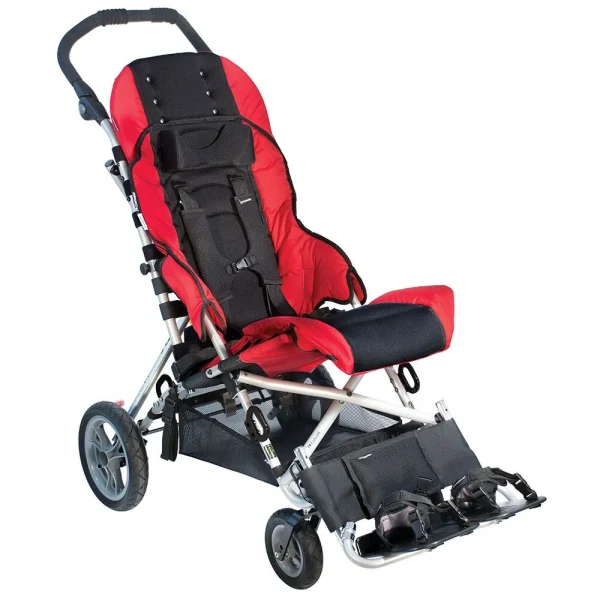
For many families, Paediatric strollers can support community access, daily routines, fatigue management, and safe positioning. The right stroller can increase independence, reduce caregiver strain, and ensure a child can participate comfortably in everyday life.
At AC Mobility, we work closely with therapists, families and carers to match each child with equipment that suits their needs now and as they grow. Below our Allied Health team share some important features to consider when prescribing or selecting a paediatric stroller.
Every stroller is designed with a maximum user weight.
It’s essential to choose a stroller that not only fits the child now but allows room for growth and long-term use. Exceeding the weight capacity can compromise safety, manoeuvrability, and frame stability so always match the stroller to the child’s weight range and consider future needs.
Children grow quickly, and their equipment needs to keep up.
Look for:
A stroller with solid growth adjustability reduces long-term costs and means the child can stay comfortable and supported as they develop.
Different children and families benefit from different seating orientations:
Many modern paediatric strollers offer reversible seat options, giving families flexibility as needs change.
Every child’s postural needs are unique. Paediatric strollers can range from:
Identifying the level of support needed is one of the most important steps in equipment selection and should always be done collaboratively with a therapist.
A stroller that’s difficult to fold becomes a daily barrier.
Families should test:
A smooth, well-designed folding system can significantly reduce stress, especially for parents rushing between appointments, school runs and outings.
Weight matters especially when lifting the stroller into and out of a vehicle.
Lightweight frames offer great convenience, while heavier tilt-in-space or high-support models often require additional consideration or even mechanical assistance. Always ensure the primary caregiver can lift and manage the stroller safely.
Not every stroller fits in every car boot.
Before prescribing, check:
A perfectly prescribed stroller is only useful if it can travel with the family wherever they need to go.
Transfers should always match the child’s abilities and the caregiver’s capabilities.
Consider:
Ensuring safe, consistent transfer methods reduces risk of injury and improves daily usability.
Accessories can significantly improve comfort, access and clinical suitability.
Common additions include:
These add-ons help customise the stroller to suit real-life routines.
Final Thoughts
Selecting the right paediatric stroller is a combination of clinical assessment, family lifestyle needs and practical considerations. The best choice is one that supports the child’s safety, comfort and participation while making daily life easier for parents and carers.
At AC Mobility, our team is here to help therapists and families find the perfect fit.
Explore our full paediatric stroller range here:
👉 https://acmobility.com.au/product-category/paediatric/strollers-pediatric/
