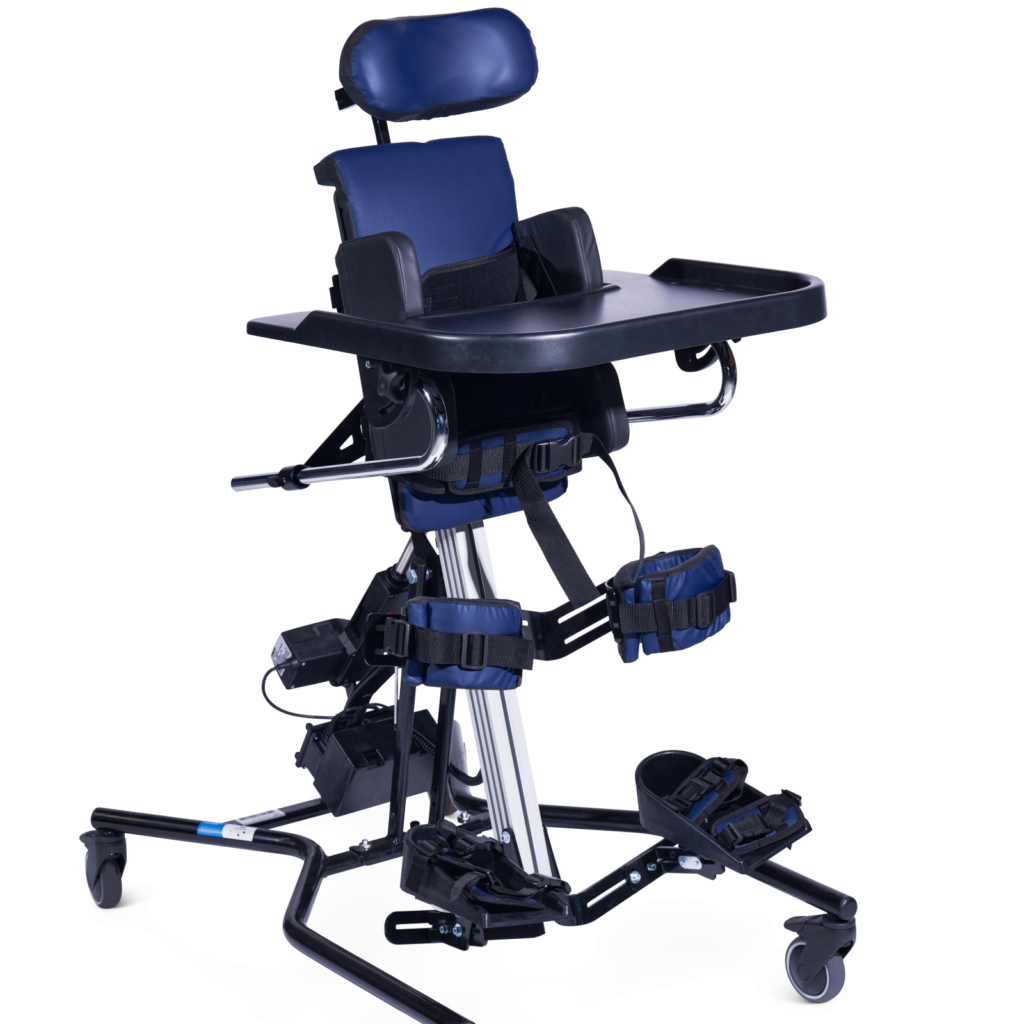
Paediatric Standers: Features, Positioning & Mobility Options
Standing equipment can play an important role in supporting posture, participation, pressure management, bone health, stretching, and everyday interaction for children and adults with complex mobility needs. Choosing the right option depends on factors such as positioning goals, transfers, growth, comfort, movement, and daily routines.
At AC Mobility, we offer a wide range of standing systems to support different clinical and lifestyle needs. Here’s a guide to some of the key features and differences across our stander range.
Prone Standers
Prone standers support the user in a forward-leaning position, often encouraging head lifting, upper body engagement, and active interaction with the environment.
The Monkey is designed for younger children and early intervention. It offers:
This style of stander is often useful for children building tolerance to standing while promoting interaction and play.
Supine Standers
Supine standers support users from behind, allowing them to stand with more posterior support and gradual positioning changes.
Features include:
Supine systems can be beneficial for individuals requiring gradual acclimation to upright positioning or more comprehensive postural support.
Multi-Position Standers
Multi-position standers offer flexibility by supporting prone, supine, or upright positioning within the same system.
The Multistander is highly versatile and designed to grow with changing needs. Features include:
The Rifton Multi Stander is known for:
Multi-position systems are often preferred when needs may change over time or where therapists want greater positioning flexibility.
Mobile Standers
Mobile standers combine standing support with self-propulsion or assisted movement, encouraging interaction and participation.
Key features include:
Mobile standers can support engagement, independence, and active participation throughout the day.
Compact & Everyday Standers
The Meerkat is designed as a lightweight, simple-to-use standing system featuring:
The Ella Stander offers:
These standers may suit users needing supportive standing without a large clinical footprint.
Advanced Positioning & Clinical Support
The APP Stander is designed for users requiring highly customised positioning support. Features include:
The Till Stander provides:
These systems are often considered where more complex physical support and positioning goals are required.
Dynamic Standing & Growth Adaptability
The Gazelle is a highly adjustable standing frame known for:
The Gazelle is commonly used across a wide range of ages and support needs due to its flexibility and positioning capabilities.
Some important considerations include:
Please see our stander comparison chart here: https://acmobility.com.au/wp-content/uploads/2024/03/Comparison-Chart-AU-Standing-Frame-20220218.pdf
Our Allied Health team can help families, therapists, schools, and support coordinators explore suitable standing options based on individual goals and functional needs.
To learn more about our standing range visit: Standing Archives - AC MOBILITY
